 On The Mend
Australia has the highest rate of skin cancer in the world. GP Dr Ross Wines explains how to protect your skin, spot changes early, and what actually happens in a skin check.
With Dr Ross Wines, who practises at Chelsea Arcade Medical
Australia has the highest rate of skin cancer in the world. In this episode of On The Mend, GP Dr Ross Wines explains why so much of it comes down to sun exposure and time spent outdoors, and what everyday sun protection really looks like.
He walks through the SCAN self-check for noticing changes early, why a melanoma can be serious even when it is very small, and the difference between a spot check and a full body skin check, so you know what to expect when you see your GP.
Dr Ross Wines is a GP at Chelsea Arcade Medical in Chelsea, Victoria, with a special interest in skin cancer medicine. He appears in Episode 1 to talk through skin checks, sun safety and early detection.


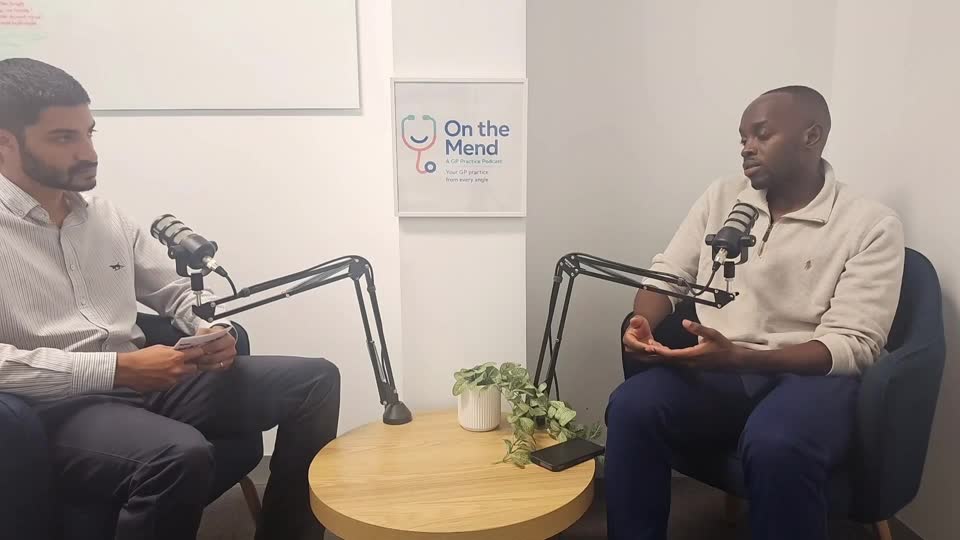
Why men's health often gets overlooked, the health checks that change with age, signs someone might be struggling, and the small changes that add up.
With Dr Geoffrey Kimanje, who practises at Chelsea Arcade Medical
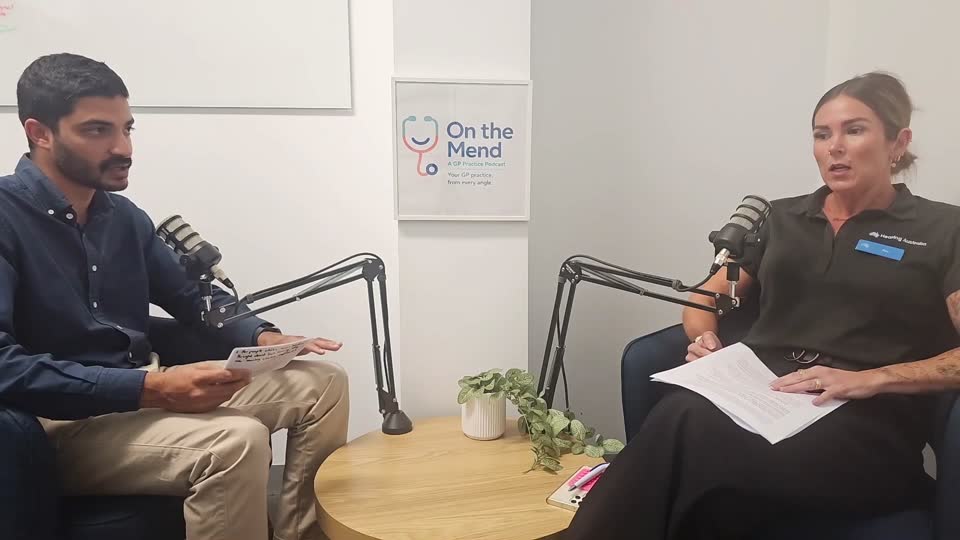
Why hearing checks matter, the early signs of hearing loss people overlook, headphones and young ears, and the support Hearing Australia provides.
With Rebecca Bourke, Community Service Advisor at Hearing Australia
A lightly edited transcript of the conversation with Dr Ross Wines. General information only, not personalised medical advice. See your GP about your own skin.
Host: Good afternoon, and today on On The Mend we are joined by Dr Ross Wines, a GP with decades of experience in family medicine and a special interest in skin cancer medicine and early detection. Dr Ross, thank you for joining us. What first drew your attention to skin cancer?
Dr Ross Wines: It is a good question. It started back when I first came into general practice in the early nineties, when there was not much training in dermatology, let alone skin cancer. Early on I saw a young patient in his early twenties who presented with lumps and, sadly, turned out to have an advanced melanoma that had already spread. He did not survive long. From my early days as a young GP, developing the skills and knowledge in skin cancer medicine and early detection has been my focus ever since.
Host: Being in Australia, why is skin cancer such a big conversation here compared to other parts of the world?
Dr Ross Wines: Australia has among the highest rates of skin cancer in the world. A lot of it comes down to a largely fair-skinned population spending a lot of time outdoors, combined with high UV levels. The UV index is higher the further north you go, towards the equator, so states like Queensland see more. People with more naturally pigmented skin have a lower risk, though no one is completely immune. In people with darker skin, when melanoma does occur it tends to appear on the soles of the feet or the palms of the hands.
Host: We are in Victoria. Does that mean we are much safer?
Dr Ross Wines: Not at all. When I worked at a clinic in Hobart I did not expect to see much, but there were a lot of farmers, and over about six to eight weeks I detected a large number of skin cancers. Anyone who spends a lot of time outdoors is at risk, wherever they live, including tradies and people who work outside. I still see young people out in the sun with no hat or sunglasses.
Host: Does skin cancer depend on your age, or can it affect anyone?
Dr Ross Wines: It can affect anyone, but more sun exposure over time increases your risk. A teenager who spends a lot of time getting sunburnt in summer is more likely to develop skin cancers later in life. That is why we try to get the prevention message across early, and encouragingly, melanoma rates in people under forty are starting to fall as that public health message gets through.
Host: Do you get enough young people coming through for skin checks?
Dr Ross Wines: Not yet, and we still need to do more on self-awareness, so people get to know their own skin and check it themselves. Not long ago I saw a man in his late twenties who had a spot in the middle of his back. His partner noticed it and encouraged him to come in. It was a fast-growing type of melanoma, and even though it was very small we were able to catch it early.
Host: Three millimetres does not sound like much, but you can see the damage it could cause. So it is really about prevention and early detection?
Dr Ross Wines: Exactly. Some melanomas can grow and spread quickly, even while they are still very small, so it is worth acting early rather than waiting for something to get large.
Host: For someone who has never had a skin check, what is involved, and what is the difference between a spot check and a full body check?
Dr Ross Wines: A spot check is when you have identified a lesion that is sore, changing, abnormal or new, and you would like it looked at. I would prefer, initially, to do a full body skin check, so I can do a proper risk assessment. That means taking your general history, family history and occupational history, looking at your UV exposure and how much time you spend outdoors, and your knowledge of prevention like slip, slop, slap, seek and slide. Then I do a full check from head to toe, so I can work out whether you are lower, medium or higher risk, which then guides how often you need checks, or whether your own self-surveillance is enough.
Host: And that advice is based on the risk you see in that patient?
Dr Ross Wines: Yes. We do not necessarily do a full skin check every year unless you have had a previous skin cancer, a strong family history, or a condition that puts you at considerably increased risk of melanoma. It is tailored to the person.
Host: You use some specialised tools for this?
Dr Ross Wines: Yes, a specialised dermatoscope. It uses polarising light and magnification, and the skill is in learning to interpret the colours and structures you see. It is like learning any other language: it takes considerable time and experience to become proficient. You cannot learn it over a couple of weekend workshops. I am accredited with the Skin Cancer College, having completed their extended diploma course. There are only around seven to eight hundred accredited skin cancer doctors in Australia.
Host: To close, what are three simple rules people can follow to reduce their risk of skin cancer?
Dr Ross Wines: First, be aware of the daily UV index, and there is an app on your phone for that. Second, apply the principles of slip, slop, slap, seek and slide, because sunscreen alone is not enough. And third, do your own self-surveillance, looking for anything that is sore, changing, abnormal or new. If you notice something, see your GP, ideally one with training in skin cancer medicine.
Host: Thank you, Dr Ross, for giving us an insight into what you do, and for joining us today. To our listeners, until next time, stay well and keep on the mend.
Subscribe on YouTube or follow On The Mend to catch each new episode and clip.
Watch on YouTube