 On The Mend
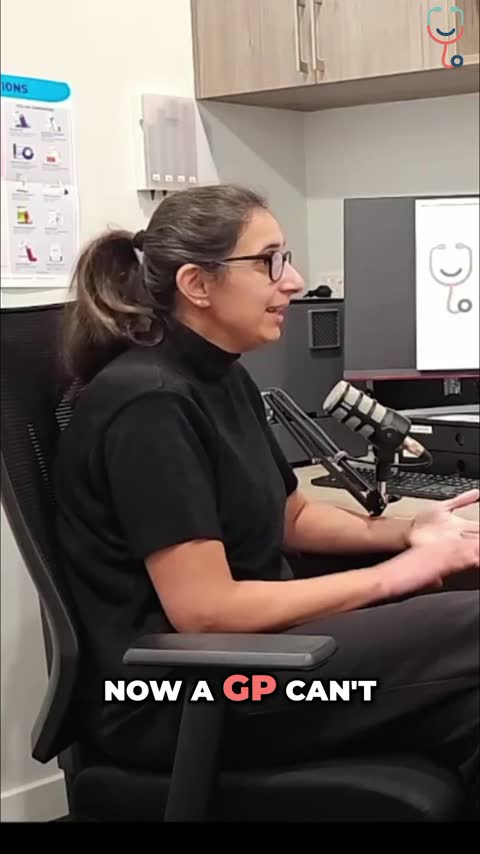
Most of what shapes a GP appointment is invisible from the patient's chair. Dr Nisha Patel explains the rules behind how appointments are booked, why 10 minutes goes faster than you think, and how a little preparation helps your GP help you.
With Dr Nisha Patel, who practises at Balwyn Central Medical
Why can't you sort everything out in one visit? Why does your GP ask you to come back when your results are normal? In this episode of On The Mend, Dr Nisha Patel explains the Medicare rules that shape how appointments are booked, and what really has to fit inside a standard 10 minute consult.
She also explains why seeing the same GP helps, why phone consults are harder than they look, and the simple things you can do before your appointment so your GP can focus on what matters most to you.
A lightly edited transcript of the conversation with Dr Nisha Patel, who practises at Balwyn Central Medical. General information only, not personalised medical advice. If you have any concerns about your health, speak with your GP.
Host: Welcome to On The Mend, a short video podcast that takes you behind the scenes of your general practice. A quick note before we start: everything we discuss is general information only. It is not tailored medical advice and does not replace a conversation with your health practitioner. If something is on your mind, please consult your GP. You can find us here in the waiting room or on YouTube or Spotify. And with that, let's get into it.
Host: Good morning, everyone, and welcome back to On The Mend. Today we're joined by Dr Nisha Patel, who's a British-trained GP with experience across community health, emergency departments, and some school settings as well. Dr Nisha has a particular interest in women's health, sexual health and community health, so overall family care and wellbeing. Good morning.
Dr Nisha Patel: Hi.
Host: How are you? Feeling relaxed, ready?
Dr Nisha Patel: I'm good, thanks. Yes.
Host: You brought up some good points in our conversation earlier, so it'll be nice to touch on a few of those things. I wanted to start with the first question, which is: what's one thing you wish every patient knew before walking into your consult room?
Dr Nisha Patel: There are certain rules that we need to follow by Medicare. Medicare doesn't want us to do things like a care plan, your results and a general consultation on the same day, and patients don't know that they need to book separate appointments for those things. Sometimes patients don't even know that they need to have been seen face to face in the last 12 months, otherwise they can't access telehealth. And that gets confusing, because there are options like MyMedicare and My Health Record. They all sound the same.
Host: They all sound the same.
Dr Nisha Patel: And that can be confusing for patients. It's confusing for us too. We get confused ourselves, because it's changing all the time.
Host: Exactly. Every few months there's a new policy and a new way of doing something. There's constant updating and change, isn't there?
Dr Nisha Patel: Everything sounds the same.
Host: That's so true. I guess that's why a lot of patients will want to come in and get everything done in the one shot, which would be great if you could do that for everyone, but it's not the case, and Medicare doesn't necessarily want it structured like that either. They would rather you come in and talk to a doctor about one particular thing, have it looked at, and then come back for another thing, rather than trying to fit everything into 10 minutes. That leads into my next question: why does the length of an appointment matter when a patient is booking in?
Dr Nisha Patel: It helps the GP to sort out what we are going to do that day and what we are going to do next time. We want patients to come with their list. If you come with your list, we can decide what we do first, what's most important and what can wait. Often we can fit everything into one appointment if all the things are related. But if you've got a few things, for example your toenail's falling off, you've got a nosebleed, and then you add in at the end, "Oh, I've got chest pain", a GP can't do all that in 10 minutes. Chest pain in itself is a 10 minute consultation.
Host: At least.
Dr Nisha Patel: We need that 10 minutes to make sure we're not missing anything. Ten minutes for a GP starts the minute you walk through our door. In that time we take your history, do the examination, write your referral letter and write up our notes. All of that has to be done in 10 minutes. So imagine that with multiple problems. How can we do that? It puts us under pressure, and if we're under pressure and rushing, we could miss things or make mistakes, and that has huge implications for patients. Even with a long appointment, patients think, "I've got a long appointment, I can come in with five different things." But a long appointment for a GP is still only 20 minutes. Ideally that will be two problems, or a maximum of three, so that we're practising safely and don't make mistakes.
Host: Exactly. There are some practices that run on a 15 minute schedule, but that's a minority. The majority are set up for 10 and 20 minutes, right?
Dr Nisha Patel: Yes. And sometimes a patient might have dementia and has booked a 10 minute appointment, and you can see that's going to take longer. We can't rush those appointments. If a patient has booked in for 10 minutes but we know they need 20, our appointments will run late, and that has a knock-on effect for the next patient and the one after. Sometimes five minutes extra for each consult ends up with you running 30 minutes late.
Host: And there's a lot that happens after the consult, after that 10 minutes. You might be following up questions from a previous patient, or contacting a specialist about a patient you saw earlier in the day. All those one, two and five minute things add up through the day, don't they?
Dr Nisha Patel: It all adds up.
Host: The next question, then: why might you ask a patient to book a follow-up appointment?
Dr Nisha Patel: Often we want a follow-up appointment to go through results. Your results might be normal, but we still need a follow-up, because that might determine where we refer you next or what investigation we do next. We might want a follow-up because you need some new treatment as a result of your test results. Follow-ups are important, and we only call people back because we need to call them back. We don't want to call you back unnecessarily, and where possible we might send your results by email. I do that for things like cervical screening. If they're normal, I'll just send them to you by email.
Host: And when you request a follow-up, the purpose is to follow up with you, right? Can I book in with another GP for the follow-up?
Dr Nisha Patel: That is tricky. Ideally, if you can book with the same GP, it's really helpful, because they know why they ordered the test and what their next step is going to be. It's a bit like making a cake. We all make our cake slightly differently, so our order might be slightly different. If you book with a new GP, they might not know why you had all those tests. They might not even have chosen to order those tests. But we appreciate that sometimes your GP is off, on leave, or not there for the next two weeks, in which case you have no choice but to book with a different GP. That's okay, but where possible, help us out by booking with the same GP.
Host: Exactly. And that still has to fit into the 10 minutes. You have to go back, read the notes, look at what investigations were done, and interpret all of that for the case in front of you.
Dr Nisha Patel: It also depends on how well the notes were written by the previous GP. I personally find it easier to read my own notes. I've written them in a certain way, I know what I'm looking for, and I can find that information really quickly. Somebody else's can be really hard.
Host: And I guess that's also why there are things like MyMedicare, where you register with one practice and GP, to promote ongoing care rather than hopping around. I understand if it's a medical certificate or a cold and flu, but people with ongoing medical conditions and long-term health issues should really be going back to the same GP and following up regularly.
Dr Nisha Patel: It helps us. If it's someone I've known for a long time, as soon as they walk in the door I know whether they look well or unwell today, because I see them all the time. It's familiar to me. With a new patient, it's much harder.
Host: And that applies to things like mental health too. You see someone regularly, then one day they don't quite look okay, and that's something you can pick up on. It's that overall picture of someone's care.
Dr Nisha Patel: I think that's also important with telephone consultations. When you see a patient, you can visually see the cues they are giving you. Over the phone, people can look really unwell but sound well, and that adds another challenge, because you have to picture what the patient is going through at home when you can't see them. If it's a patient you've known for some time, that's a little easier. You can almost picture them without having to see them.
Host: Because doctors are always paying attention to the whole patient. You're not just listening to them, you're looking at them and hearing them. A consult is not a two-dimensional experience, is it?
Dr Nisha Patel: One hundred percent.
Host: That leads to my final question: how can a patient prepare before seeing their GP?
Dr Nisha Patel: Most patients have chosen to book in with us, and they know why they're coming. If we take the example of a chest infection, they might think they've got a chest infection and need antibiotics. If they can tell us those ideas and concerns, it helps us, because we can make sure we're addressing their concerns and get on the same page. So let us know. We don't mind. If you've Googled something, it might not be at the top of our list, but we're not against Google. Tell us what you found and what you're worried about, and then we can address it. It might even be a good suggestion that we haven't thought of. Just give us the list and tell us what's going on. The more information you give us, the easier it is for us to help you.
Host: And it helps you manage the process, whether that's come back in one week or six weeks, whatever the follow-up might be, so things don't get missed. That's great, Dr Nisha. Thank you for coming in today and giving us some perspective on what happens inside the consult room, and what can make it better and easier for the patient as well. Hopefully a few of these tips will make your next GP visit more productive and more comfortable. Thank you again, Dr Nisha, for joining us, and with that, stay well and keep on the mend.
Dr Nisha Patel is a GP who practises at Balwyn Central Medical. She trained in the United Kingdom and has worked across community health, emergency departments and school settings. She has a particular interest in women's health, sexual health and family wellbeing.
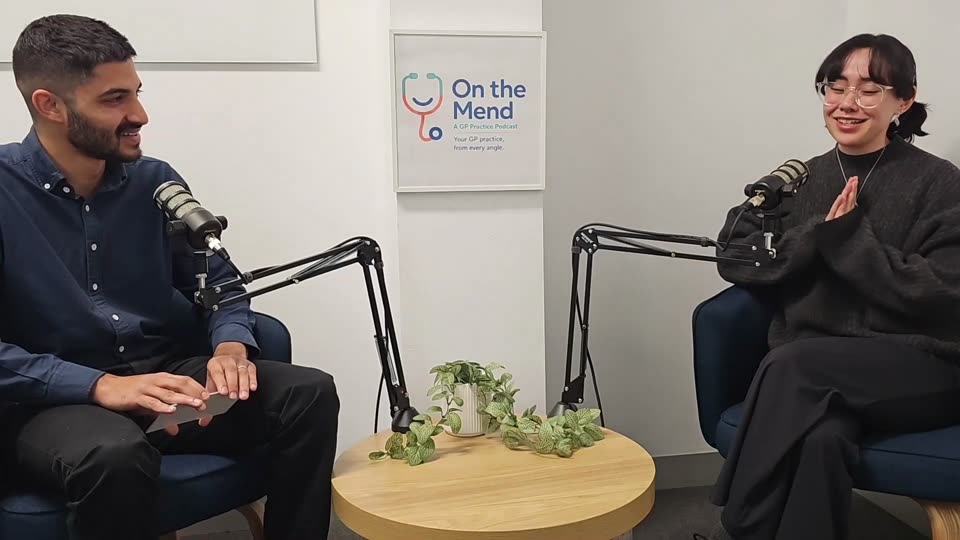
What really happens behind the front desk: the referrals and records that keep your care moving, why your results go to your doctor first, and why kindness matters on a busy morning.
With Emily Ryan, medical receptionist
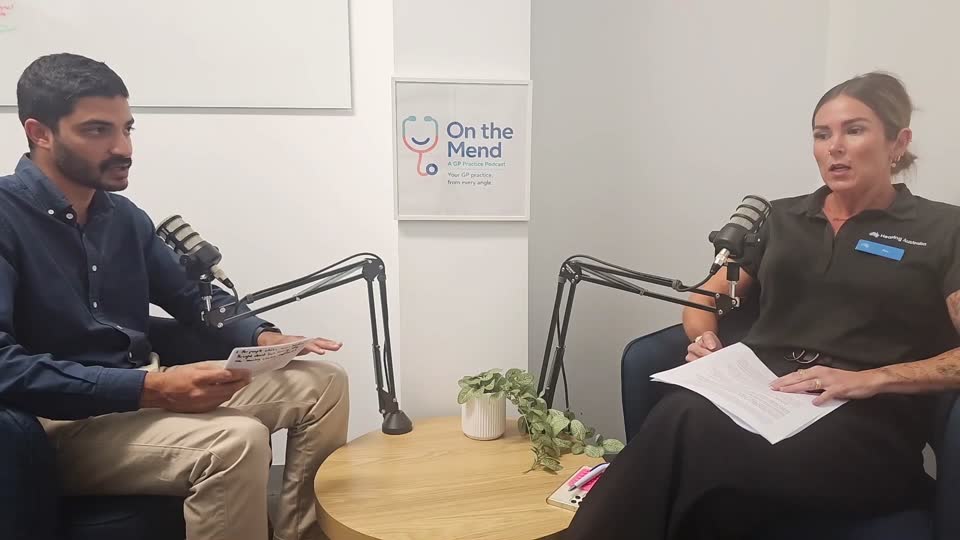
Why hearing checks matter, the early signs of hearing loss people overlook, headphones and young ears, and the support Hearing Australia provides.
With Rebecca Bourke, Community Service Advisor at Hearing Australia
Subscribe on YouTube or follow On The Mend to catch each new episode and clip.
Watch on YouTube